

Corporate mortality rates have been accelerating for decades. The average lifespan of a company on the S&P 500 has shrunk dramatically, largely because the traditional enterprise was engineered for an era of predictability that no longer exists. For generations, corporate architectures were designed to optimize efficiency, scale, and mass production. Today, those same rigid structures have become fatal liabilities. When a sudden market shift occurs—whether triggered by a technological breakthrough, a supply chain fracture, or shifting consumer behavior—organizations burdened by heavy bureaucracy find themselves unable to pivot.
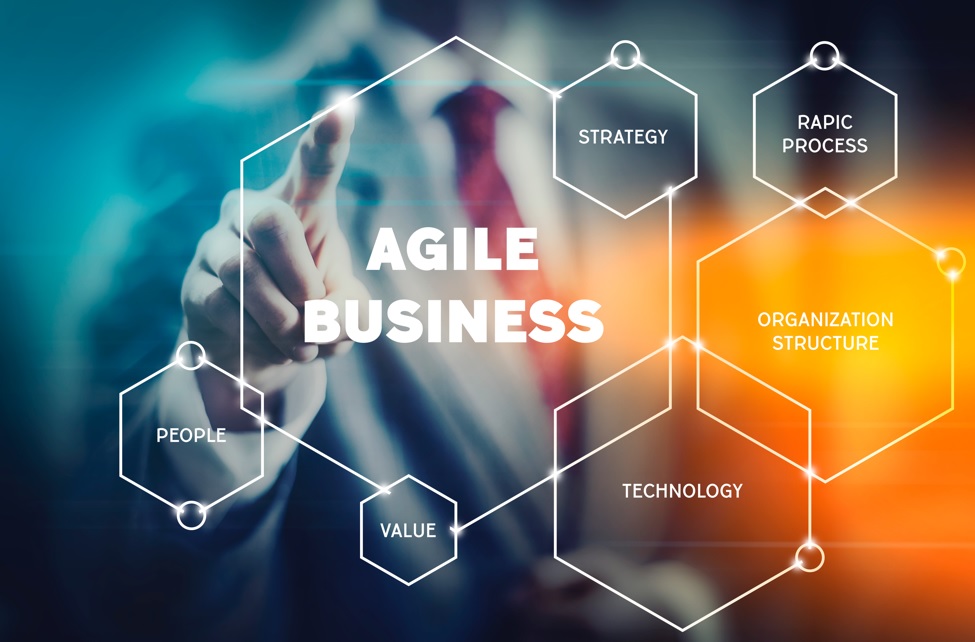
The solution is not merely adopting new project management software or rebranding existing departments. True survival requires a fundamental rewiring of the company’s DNA. The agile enterprise takes the principles of adaptability, speed, and iterative learning and applies them to the entire operational structure, moving far beyond the boundaries of software development.
Dismantling the Industrial Hierarchy
The traditional corporate organizational chart resembles a pyramid, characterized by strict command-and-control frameworks and isolated functional silos. Marketing, engineering, finance, and human resources operate in their own vacuums, passing work over invisible walls. In a stable environment, this division of labor drives efficiency. In a volatile environment, it creates devastating bottlenecks.
The latency between sensing a market shift at the front lines and executing a strategic response from the executive suite is the silent killer of legacy businesses. By the time a new consumer trend is analyzed by marketing, budgeted by finance, and developed by product teams, the opportunity has already passed.
Transitioning to an agile operational structure requires the dismantling of these silos in favor of decentralized decision-making. The goal is to push authority as close to the information as possible. When frontline employees and mid-level managers are empowered to make strategic calls without navigating a labyrinth of approvals, the organization’s reaction time drops from months to days. This does not mean abandoning governance; rather, it means establishing clear guardrails and strategic alignment, then trusting the edges of the organization to execute autonomously.
The Anatomy of an Agile Operating Model
Transforming the structural framework of an enterprise requires shifting from a focus on internal functions to a relentless focus on customer value. This is achieved through specific, intentional changes to how teams are built and funded.
Cross-Functional Pods and Value Streams
The bedrock of the agile enterprise is the shift from departments to value streams. A value stream represents the end-to-end process required to deliver a specific product, service, or customer experience.
Instead of housing all engineers in one department and all marketers in another, agile enterprises deploy cross-functional pods. A single pod might consist of a product manager, a data analyst, a software developer, and a marketing specialist, all permanently assigned to a specific customer journey. Because this small, autonomous unit contains all the necessary skills to design, build, and launch a solution, they can operate with incredible velocity. They are not waiting on other departments to prioritize their requests; they own their outcomes entirely.
Adaptive Funding and Resource Fluidity
Rigid annual budgeting is fundamentally incompatible with agility. Traditional budgeting forces executives to predict market conditions twelve to eighteen months in advance, locking capital into specific projects. When the market inevitably shifts, that capital is trapped, resulting in a culture that funds obsolete strategies while starving emerging opportunities.
Agile enterprises embrace dynamic resource allocation. Instead of funding projects on an annual basis, they fund value streams using a venture-capital model. Teams receive initial seed funding to test a hypothesis or build a minimum viable product. If the market responds positively, they receive further funding to scale. If the initiative fails to gain traction, the project is killed, and both the capital and the talent are rapidly reallocated to more promising ventures. This pivot-or-persevere mentality eliminates sunk-cost fallacies and ensures that the company’s resources are always flowing toward the highest point of leverage.
Leveraging Technology for Structural Flexibility
You cannot build an agile organization on legacy infrastructure. The speed of decision-making is directly proportional to the speed of data flow. Digital transformation is the necessary enabler of structural agility, allowing decentralized teams to operate with total visibility.
The democratization of data is a critical first step. In traditional organizations, data is hoarded by a central analytics team, turning every data request into a queue. In an agile enterprise, real-time dashboards and intuitive analytics tools are pushed to the very edges of the organization. When cross-functional pods have immediate access to customer behavioral data, supply chain metrics, and financial constraints, they can iterate on their strategies daily.
Furthermore, cloud infrastructure and modular architecture allow businesses to scale operations up or down instantly. Instead of massive, monolithic software systems that take years to update, agile companies rely on microservices. This allows them to swap out individual components of their operations—such as a payment gateway or a recommendation engine—without disrupting the entire enterprise.
Cultivating the Mindset of Continuous Adaptation
A company can reorganize its chart and upgrade its technology, but without a profound cultural shift, these structural changes will ultimately fail. Agility is a behavioral trait before it is an operational one.
The Imperative of Psychological Safety
Traditional corporate culture penalizes failure, which naturally breeds risk aversion. Employees learn to protect their careers by following standard procedures, even when those procedures are failing the customer. To adapt to rapid market shifts, an enterprise must cultivate psychological safety—the shared belief that employees can take calculated risks, voice dissenting opinions, and admit mistakes without fear of retribution.
When failure is reframed as a necessary byproduct of innovation and speed, teams are willing to launch imperfect products, gather real-world feedback, and iterate rapidly. This loop of continuous, incremental improvement is vastly superior to spending years perfecting a product in isolation, only to find the market has moved on.
The Evolution of Executive Leadership
The transition to an agile structure forces a reckoning at the leadership level. The traditional executive role of the “heroic decision-maker” becomes obsolete. When teams are autonomous and decentralized, the role of leadership shifts from directing work to setting the vision and removing impediments.
Leaders in an agile enterprise act as architects of the system. They focus on clearly communicating the broader strategic goals, defining the metrics for success, and ruthlessly eliminating bureaucratic hurdles that slow their teams down. By stepping back from the tactical execution, executives free up their own cognitive bandwidth to scan the horizon for the next massive market shift.
Building an agile enterprise is not a finite project with a definitive end date; it is the adoption of a perpetual state of readiness. As technological acceleration and global interconnectedness continue to introduce unprecedented volatility into the market, the only sustainable competitive advantage is the capacity to change faster than the environment. By dismantling rigid hierarchies, organizing around value streams, establishing dynamic funding models, and fostering a culture of psychological safety, businesses can transform themselves from fragile monoliths into highly adaptive organisms, ready to capture whatever opportunities the next shift brings.

Comments are closed.