
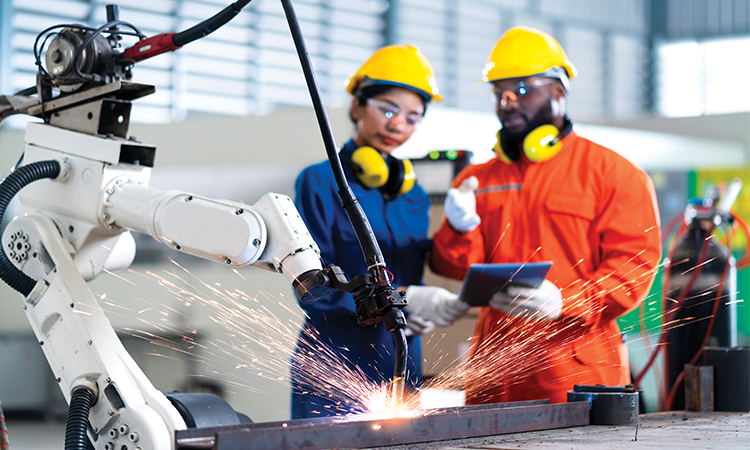

For many fabrication shops, automation is less about possibility and more about practicality. The question is not whether robotics can work, but whether they will work within the realities of your operation, your parts, your team, your layout, and your delivery timelines. Robotic welding is often the most effective starting point because it addresses a process that directly impacts throughput, labor utilization, and product consistency. A well-executed first cell can set the standard for how automation is introduced and expanded across the shop.
One of the immediate benefits of robotic welding is how it changes the role of skilled labor. Instead of relying heavily on manual welding to carry production volume, experienced welders can shift into roles that improve the system as a whole. This includes refining joint preparation, setting quality standards, supporting programming, and training operators. The result is a more scalable approach to production that does not depend as heavily on adding headcount. It also improves predictability, making it easier to estimate cycle times, plan schedules, and maintain consistent quality across shifts.
What a successful first cell looks like
A strong starting point begins with careful part selection. Focus on a group of components that share similar materials, joint configurations, and accessibility. Keeping the initial scope narrow helps reduce complexity and allows the team to build confidence quickly. Parts that frequently cause bottlenecks, overtime, or quality issues are often ideal candidates because improvements are easier to measure.
Fixturing and part presentation are equally critical. Many challenges attributed to robotics are actually caused by variation in upstream processes. Inconsistent fit-up, shifting reference points, and unpredictable gaps can all affect weld quality. A reliable cell design includes stable clamping, repeatable positioning, and a clear plan for handling variation when it occurs. Reviewing the full system, from prep to weld to unload, helps prevent the robot from compensating for issues that should be addressed earlier.
Programming plays an important role, but it should not carry the entire burden of consistency. Effective setups include parameter control, consumable management, and simple verification steps to prevent defects from entering the process. Integrating inspection into the workflow can also reduce downstream rework and improve overall efficiency.
Ownership is another key factor. Clear responsibility for operation, maintenance, and quality decisions ensures the cell runs smoothly day to day. Training should be tailored to the team and the specific application, giving operators the confidence to manage the process and respond to issues as they arise.
When implemented with focus and discipline, robotic welding provides more than automation. It creates a repeatable model for improving processes, building internal capability, and scaling operations over time.
To explore how robotic welding can fit your operation and growth plan, take a look at the accompanying resource from Capital Machine Technologies, a provider of press brakes service, repair and maintenance.


Comments are closed.